Many would say the Pope, or the prime minister of Japan, the U.K., or even India. Others might say Elon Musk.
Enter the head of the Federal Reserve. The Fed Chair has more economic power than almost anyone in the world. And economic power is power.
A few things contribute to the influence of the leader at the Fed:
1. The dollar being the reserve currency
- Used as a medium for trade around the world
- 57% of global foreign exchange reserves are in dollars
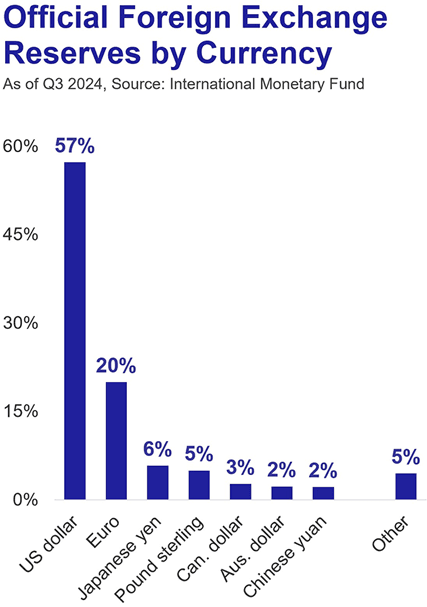
Because everyone needs dollars and dollar assets, there's massive structural demand for U.S. Treasuries. Foreign governments, pension funds, and central banks park trillions in them. This demand lets the U.S. borrow cheaply and run deficits that would crush any other country.
Basically, everybody wants dollars, and because everybody wants dollars, the U.S. can sell trillions worth of Treasuries without having to worry about debt. Spend money, sell Treasuries, rinse and repeat. It can go on forever as long as the reserve status holds.
2. The global economy
The world economy is led by the United States and China, yet China's economy is mostly closed to outsiders. This makes Jerome Powell, the current leader of the Fed, that much more important. He can change interest rates at any given time, which would not only affect the United States, but would undoubtedly affect the rest of the world.
When Powell hikes, capital rushes into dollar assets, the dollar strengthens, and emerging markets with dollar-denominated debt suddenly owe more. When he cuts, the flow reverses. Commodities reprice, mortgages in Europe shift, and currencies from the Turkish lira to the Brazilian real move on his words.
3. The balance sheet
The Fed sits on nearly $8 trillion in assets and can print money in a crisis, at any time, without Congressional approval. There are two ways it can do this.
The first is through the Board of Governors, which is made up of 7 presidentially appointed officials and they act in times of emergency crisis.
The second is the Federal Open Market Committee (FOMC), made up of 12 voting members (the 7 Governors are included in this). They are the day-to-day, meeting-to-meeting body that votes on rate cuts, QE, and open market operations. The FOMC meets 8 times a year.
Here are the 12 voting members of the FOMC in 2025:
| Name | Role / Region | Term End | Nominated By |
|---|---|---|---|
| Jerome Powell | Chair, Board of Governors | Chair: May 23, 2026 Governor: January 31, 2028 | Governor: Barack Obama Chair: Donald Trump |
| Philip Jefferson | Vice Chair, Board of Governors | Vice Chair: September 13, 2027 Governor: January 31, 2036 | Joe Biden |
| Michelle Bowman | Vice Chair for Supervision, Board of Governors | Vice Chair: June 9, 2029 Governor: January 31, 2034 | Donald Trump |
| Christopher Waller | Governor, Board of Governors | Governor: January 31, 2030 | Donald Trump |
| Michael Barr | Governor, Board of Governors | Governor: January 31, 2032 | Joe Biden |
| Lisa Cook | Governor, Board of Governors | Governor: January 31, 2038 | Joe Biden |
| Adriana Kugler | Governor, Board of Governors | Governor: January 31, 2026 | Joe Biden |
| John Williams | President, New York Fed (permanent) | Ongoing | NY Fed Board |
| Austan Goolsbee | President, Chicago Fed (2025 rotation) | Ongoing | Chicago Fed Board |
| Susan Collins | President, Boston Fed (2025 rotation) | Ongoing | Boston Fed Board |
| Alberto Musalem | President, St. Louis Fed (2025 rotation) | Ongoing | St. Louis Fed Board |
| Jeffrey Schmid | President, Kansas City Fed (2025 rotation) | Ongoing | Kansas City Fed Board |
So who will be the next Fed Chair, and why does that matter to you?
We've gone over the influence that he or she has, but ultimately here's what happens when the Fed moves interest rates:
During the policy meetings that take place eight times a year, the Fed Chair will issue a decision to either cut, hike, or not change interest rates.
Say they cut rates.
There are no magic scissors. To lower interest rates, the Fed has to actually go into the open market and buy billions in bonds, injecting cash into the banking system. To raise them, it does the opposite: selling bonds and pulling cash out. Powell sets a target rate, and open market operations are the mechanism that makes it run.
One unelected official, making decisions in Washington, reaches directly into the bank accounts and kitchen tables of 330 million Americans. No single human being has more influence over the money they earn, spend and save than the chair of the Federal Reserve.
Think auto loans, mortgages, credit cards, prices you pay every day at the store—even your job is affected by the decisions the chair of the Fed makes.
The stock market is also affected. Lower rates mean economic stimulus, which leads to a boost in corporate earnings, which in turn leads to a higher stock market.
If the unemployment rate is high, generally the Fed lowers interest rates to boost the economy. If you've ever had a hard time finding a job, blame the Fed. If you've ever had an easy time finding a job, thank the Fed.
Enter Kevin Warsh—Trump's pick for Fed Chair.
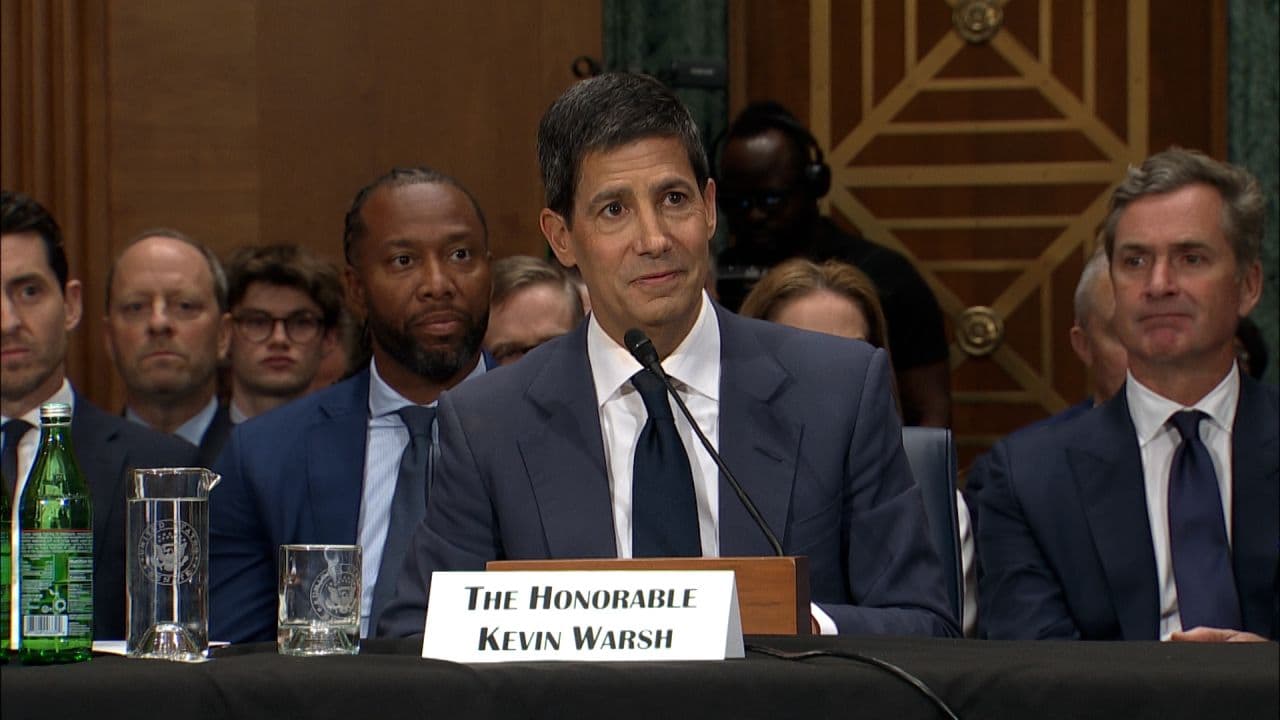
Born on April 13, 1970, in Albany, New York, Kevin Maxwell Warsh is an American financier, economic policy expert, and long-time central banking official. He served as a member of the Federal Reserve Board of Governors from 2006 to 2011, under Presidents George W. Bush and Barack Obama. He was one of the youngest governors ever appointed. He went to Stanford for his undergraduate degree and Harvard for his JD.
A lot has been said about the independence of the Fed—and that's the reason Kevin Warsh is one of the most polarizing choices in modern times. Trump chose him, and that's what scares people.
Trump has a history of going after Jerome Powell and is even in the process of trying to have him fired through the DOJ due to his reluctance to lower rates. Whether rates should be lowered is a different question altogether, but the independence of the Fed is of the utmost importance to Federal Reserve interest rate policy that is heard over the world.
If the Fed is cutting or hiking rates due to the pressure of politics, it's not a good look. The confirmation hearing of Kevin Warsh, that took place today, is without a doubt the most important hearing of the 21st century.
Whether or not the Fed can keep its independence is an issue that will affect every American in the days to come.