Kalshi, January 1 to September 28. Republicans opened the year at 68%. Democrats close at 62%.
- 1War begins Feb 28
- 2Navy blockade Apr 13
- 3Pakistan deal Jun 18
- 4Deal collapses Jul 8
- 5Pipeline attack Early Sep
- 6Fed hike Sep 16
Source: Kalshi, “Which party will win the U.S. Senate?” (CONTROLS-2026), daily closing price.
Democrats are 62% favorites on Polymarket to win both chambers of Congress on November 3.
Before the U.S. and Israel struck Iran on February 28, traders gave Republicans about a 60% chance of keeping the Senate.
The House side of that bet has leaned blue for months. Polymarket's House contract prices Democrats at 93% on $12.6 million in volume, and its balance-of-power market has traded $14.6 million since it opened in July 2025.
Polymarket, $14.6 million traded
Source: Polymarket, midpoint prices on September 29.
From 67% Republican to 62% Democratic
The Senate is where the money moved. Republicans hold a 53-47 majority, so Democrats need a net gain of four seats, and several of the seats they need sit in states Donald Trump won by double digits in 2024.
On January 1, Kalshi traders gave Republicans a 67% chance of holding the chamber. Today Kalshi prices Democrats at about 62%, and Polymarket's Senate market has them at 63%.
The swing tracked the war in Iran and the price of gas.
The war reached voters at the pump
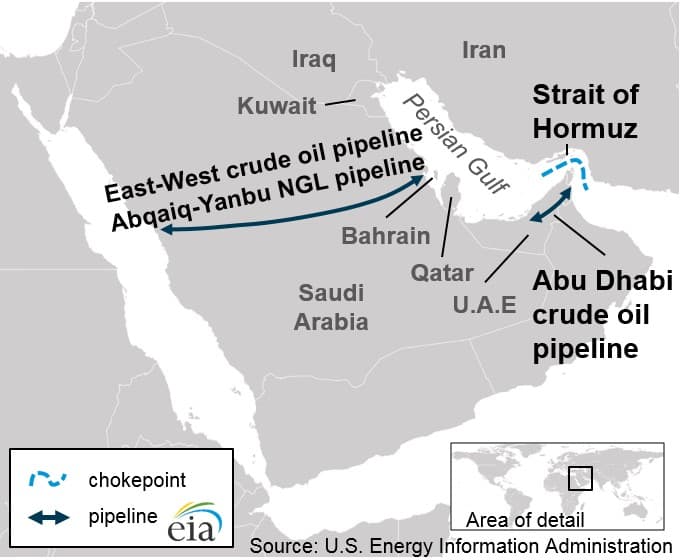
The first strikes killed Supreme Leader Ali Khamenei. Iran answered by closing the Strait of Hormuz, which the Energy Information Administration says carried 20.9 million barrels a day in early 2025, about 20% of global petroleum consumption.
Public support for the war started low. A Reuters/Ipsos poll taken February 28 through March 1 found 27% of Americans approved of the strikes, and in September the number was 34%.
Traders moved within days. About two weeks in, Democratic Senate odds on Kalshi had climbed 11 points to 51%, and Kalshi spokesperson Jack Such said Democrats were favored for the first time in the market's history.
The war reached voters through gas prices. On February 26, AAA's national average for regular gas was $2.98.
By March 26 it was $3.98, up a dollar in a month. On April 2 it passed $4 for the first time since August 2022.
Drivers pay for fuel every week, and voters tend to hold the president responsible for what they pay. Trump's approval in the Reuters/Ipsos poll fell from 40% to 36% in a single week in March, and only 29% approved of his handling of the economy.
On April 5, Trump threatened to strike Iranian power plants and bridges if the strait stayed closed. The U.S. Navy began blockading Iranian ports on April 13.
Democratic Senate odds peaked near 55% on Kalshi in mid-April.
A spring reprieve for Republicans
Then the fighting eased, and the odds moved back toward Republicans. By May 1 Kalshi had the Senate at an even 50-50, and Republicans held that ground through the summer.
In June, a memorandum mediated by Pakistan promised to reopen the strait and end the U.S. blockade. It broke down on July 8 after attacks on commercial ships and fresh U.S. strikes on Iran.
September's shock
September delivered the biggest move of the year. A Houthi attack shut Saudi Arabia's East-West pipeline, one of the few routes around Hormuz, and AAA's average jumped 13 cents in a week to $4.27 on September 10.
By September 28 the average stood at $4.48, about $1.50 above its prewar level. Six states are above $5 a gallon, and California is near $6.37.
U.S. regular gasoline, dollars per gallon (left), and Kalshi's Democratic Senate odds (right)
Marker 1: war begins, February 28. Sources: U.S. Energy Information Administration weekly retail gasoline prices; Kalshi CONTROLS-2026, daily close.
Nate Silver has pointed to a second fuel cost that hits rural voters harder. Diesel inflation runs much higher in farm states that depend on it, which may help explain why Iowa's Senate race became competitive.
On September 26, Trump rejected Iran's offer to reopen the strait within seven days if the U.S. lifted its blockade and oil sanctions, calling it “unacceptable.” Asked whether he would resume strikes, he said, “I am always thinking about it.”
CNBC reported Brent crude closed at $105.28 a barrel on September 28 after climbing as high as $108.83 that day.
Inflation, a Fed hike and 7% mortgages
Higher fuel costs have spread through the rest of the economy. The Bureau of Labor Statistics said consumer prices rose 3.4% in the year through August, with energy up 16.3% and gasoline up 27.4%.
Core inflation, which strips out food and energy, was 2.4%. The gap between those two numbers comes from what people pay for food and fuel.
Consumer prices, change over the past 12 months
Source: Bureau of Labor Statistics, August 2026 CPI.
The Federal Reserve responded with a rate hike. Kevin Warsh, who called for rate cuts before becoming Fed chair in May, led a unanimous quarter-point increase on September 16.
Futures traders now see about a 70% chance of another hike at the October 27-28 meeting.
The bond market added pressure. The 30-year Treasury yield touched 5.501% on September 24, its highest level since 2004, and the 10-year reached 5.223%, its highest since 2007.
Freddie Mac's average 30-year mortgage rate rose to 7.03% that week, above 7% for the first time since January 2025.
30-year Treasury yield (left) and Kalshi's odds of a 25bp hike at the October 27-28 meeting (right)
Marker 6: Fed hikes, September 16. Sources: U.S. Treasury daily par yield curve; Kalshi KXFEDDECISION-26OCT, “Hike 25bps,” daily close.
Trump's approval at career lows
That's a hard economy for a president who campaigned on lower prices. Reuters/Ipsos put Trump's approval at 32% in a September 17-20 poll, the lowest of his political career, and approval among Republicans fell to 73% from 82% a week earlier.
Other polls tell the same story. The Wall Street Journal found 37% approval, the lowest pre-midterm reading in its polling, and The New York Times average sits at 37% approve and 60% disapprove.
Sources: Reuters/Ipsos, The Wall Street Journal, The New York Times.
The war itself remains unpopular. A University of Massachusetts poll in August found 68% disapprove of Trump's handling of it and 57% call it the wrong decision.
In the Reuters/Ipsos poll, 82% said they expect the war to last an extended period. Trump has pledged it would end “immediately after” the election.
Forecasters moved first, then the markets
The generic ballot moved in the same direction. An Economist/YouGov survey found Democrats ahead 52% to 38% among likely voters, and a New York Times/Siena poll had them up 8.5 points.
Silver's likely-voter average had Democrats ahead by 9.6 points on September 29.
His forecast rose from a 50.6% Democratic Senate chance on September 6 to 58.6% on September 14. Silver then argued that calling the Senate a toss-up was “no longer accurate.”
The markets followed within days. The Election Betting Odds tracker went from 50-50 at the start of the week of September 14 to 63.8% for Democrats by September 23.
Kalshi's “blue wave” contract pays out if Democrats win at least 218 House seats and 49 Senate seats. It rose from 73.8% to 83.6% in a single week.
Texas: the race that shows the shift
Texas shows the shift inside one race. Kalshi priced Democrat James Talarico at 51% against Republican Ken Paxton on September 14, then at 58% on September 23, and the contract has since traded near 60% on more than $15 million in volume.
Second-quarter fundraising
Sources: Kalshi SENATETX-26, last trade on September 29; FEC filings.
Paxton won the nomination by beating Sen. John Cornyn with Trump's endorsement. Trump also mocked Paxton's appearance while endorsing him.
Talarico raised $30 million in the second quarter to Paxton's $9 million, and more than $70 million for the cycle. The Senate Leadership Fund's Texas affiliate answered with a $51.3 million TV buy on September 10 and 11.
AdImpact projects $440 million in spending on the race by Election Day, more than double the roughly $210 million record set by Ted Cruz and Colin Allred in 2024. More than $153 million had been spent by mid-September.
Late-night TV raised Talarico's profile further. On September 9, Jimmy Kimmel told viewers his Talarico interview would stay off ABC after pressure from Trump's FCC.
Earlier in the year, Stephen Colbert's Talarico interview went online after similar pressure and became his most-watched interview ever. Colbert's show has since ended.
The White House has fought the press in other ways. It launched “Trump TV” and blocked CNN, MS NOW and Politico, and a judge ordered their credentials restored on September 24.
Cracks in the coalition
Some of Trump's own media allies turned on the war early. Joe Rogan, who endorsed Trump in 2024, said on March 10 that the war “seems so insane based on what he ran on” and that supporters feel “betrayed.”
“Seems so insane based on what he ran on.”
When Tucker Carlson and Megyn Kelly also criticized the war, Trump replied that “MAGA is Trump.” Rogan later called Trump's renaming of Lake Ontario to “Lake America” a distraction from the war.
“MAGA is Trump.”
Trump has also made campaign moves that failed to lift his party's odds. At the Republican midterm convention in Dallas, he promised every adult citizen a $5,000 “dividend” if Republicans hold both chambers, a plan that could cost more than $1.2 trillion.
Forbes found the promise did little to move the markets. The Supreme Court also blocked his restrictions on mail-in voting.
His endorsements produced mixed results. In May, Trump-backed challengers ousted Sen. Bill Cassidy and Rep. Thomas Massie.
By mid-August, 10 Trump-endorsed candidates had lost primaries, including five running for governor. His overall primary record is still about 96%.
Some Republicans on the ballot are putting distance between themselves and the White House. Rep. María Elvira Salazar of Florida ran an ad on September 17 saying Trump's immigration enforcement has “gone too far.”
The ratings caught up
The race ratings followed the polls. On August 20, the Cook Political Report moved Texas and Iowa to toss-up, and Senate Minority Leader Chuck Schumer said, “We've blown the map wide open.”
Cook now lists seven Senate toss-ups: Alaska, Iowa, Maine, Michigan, New Hampshire, Ohio and Texas. On September 23 it moved Georgia, where Jon Ossoff faces Republican Mike Collins, to Likely Democratic, and put Kansas and South Carolina on the board as Lean Republican and Likely Republican.
Cook Political Report ratings, with Nate Silver's September 29 polling margins on the toss-ups
New Hampshire is a toss-up with no Silver margin listed. Sources: Cook Political Report; Silver Bulletin.
Silver's September 29 update shows Democrats ahead in Texas by 3.6 points, Maine by 2.7, Ohio by 5.3, Iowa by 2.1, Michigan by 3.4 and Alaska by 2.5.
In Ohio, Sherrod Brown is running against Sen. Jon Husted. In Iowa, Josh Turek faces Ashley Hinson, and in Michigan, Abdul El-Sayed is the Democratic nominee.
Special elections have shown the same trend. MultiState's tracking shows Democrats running a median 10.4 points ahead of their 2024 presidential margins in this year's state legislative specials.
The standout came in Texas, where Democrat Taylor Rehmet won a state Senate seat Trump carried by 17.4 points, a 31.8-point swing.
Where Republicans still have the edge
Republicans still hold real advantages, starting with money. The RNC ended August with $125.6 million in cash, while the DNC had $16.9 million against $17.6 million in debt.
The three Republican national committees hold about $233.4 million combined, compared with $130.4 million for the Democratic committees.
The House committees are close. The NRCC raised $13.5 million in August to the DCCC's $12 million and has $89.1 million on hand to the DCCC's $75.9 million.
On the Senate side, the DSCC has $37.6 million to the NRSC's $18.7 million. The NRSC spent $50.3 million in August, about $45.9 million of it coordinated with campaigns after the Supreme Court struck down the limits on that spending.
Trump's MAGA Inc. super PAC ended August with $415.8 million, according to its FEC filing. As of June 30, the Senate Leadership Fund had $238.6 million to the Senate Majority PAC's $126 million.
Cash on hand, millions of dollars
End of August, except the NRSC and DSCC. Source: FEC filings.
Democrats have the edge with small donors. ActBlue processed $586 million in the second quarter, its best non-presidential quarter on record.
Elon Musk is back on the Republican side as well. He has put more than $50 million into his America PAC and $10 million each into the main House and Senate Republican super PACs, and America PAC's first disclosed spending included $247,000 for Paxton.
Redistricting also helps the GOP on net. Texas redrew its map to target five Democratic seats, and the Supreme Court let the map stand in April.
Missouri, North Carolina and Ohio added Republican-leaning seats, and Florida redrew four Democratic-held districts. The Supreme Court's 6-3 ruling in Louisiana v. Callais also weakened Section 2 of the Voting Rights Act.
California answered with Proposition 50, which passed 65% to 35% and adds about five Democratic seats. A court-ordered map in Utah adds one more, while Virginia's redraw was blocked by its state supreme court.
Democracy Docket projects Republicans gain 16 to 18 seats from the new maps versus about six for Democrats. Other estimates are smaller, and all of them show a net gain for Republicans.
What could swing it back
Most of the Democratic Senate leads are small, and a 50-50 Senate would leave control with Vice President JD Vance's tiebreaking vote.
Special elections can also overstate a wave. In 2018, the Democratic swing in specials shrank to about 2 points between May and October.
Republicans have already come back once this year, when the fighting eased in the spring. The June agreement showed how quickly a diplomatic opening can pull gas prices and the odds back toward the GOP.
September consumer price data is due October 14, and the Fed meets again on October 27 and 28. A deal that reopens Hormuz before Election Day would show traders how much of the Democratic edge depends on the price of gas.
- Oct 14September CPI report
- Mid-OctQuarterly FEC fundraising reports
- Oct 27-28Federal Reserve meeting
- Nov 3Election Day
Track the live odds for every Senate, House and governor race on the Exchange Alpha midterm map.